O Gringo in Ovar – Solo exhibition · Centro de Arte de Ovar · 18 April–22 September 2024
Presented within Aveiro 2024 — Portuguese Capital of Culture and Maio do Azulejo · Curated by the Museu Nacional do Azulejo
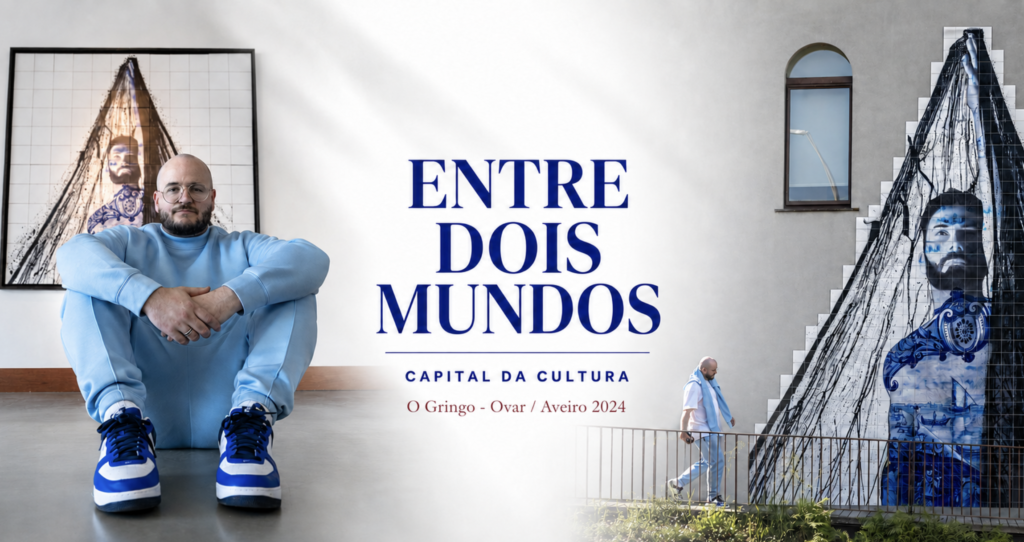
O Gringo Aveiro , Ovar 2024 – ENGLISH | PORTUGUÊS | FRANÇAIS
Between Two Worlds: woman, man and ocean.
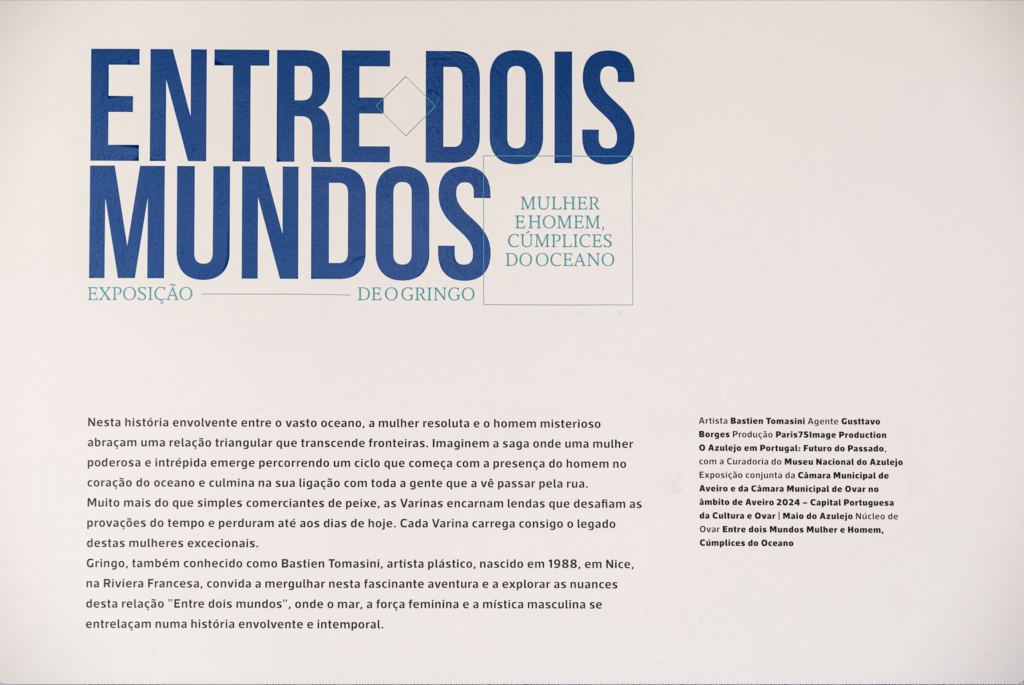
In 2024, the Centro de Arte de Ovar presented Entre Dois Mundos — Mulher e Homem, Cúmplices do Oceano, a solo exhibition by O Gringo developed around the relationship between woman, man and sea.
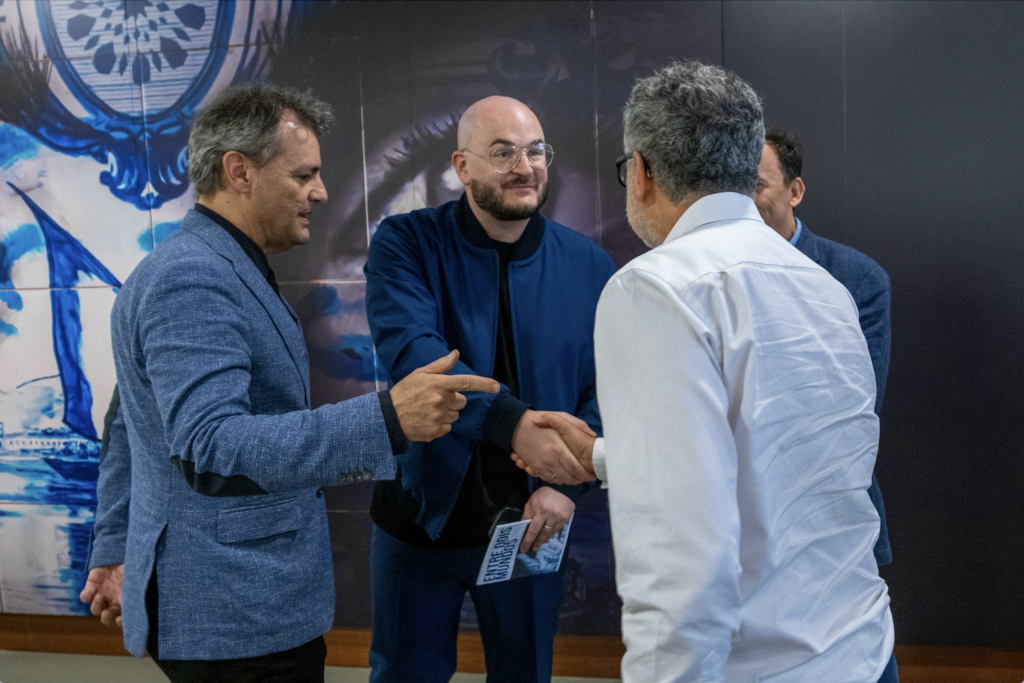
Opening on 18 April and remaining on view until 22 September 2024, the exhibition formed part of the programme surrounding Aveiro 2024 — Portuguese Capital of Culture and Maio do Azulejo. Curated by the Museu Nacional do Azulejo, it placed O Gringo’s contemporary visual language within the cultural landscape of Ovar, officially recognised as a “Living Museum City of Azulejo”.
Ovar was not merely the location of the exhibition. Its streets, ceramic-covered façades, maritime memory and connection to the ovarinas provided an essential context for the narrative presented inside the Centro de Arte.
O Gringo — Entre Dois Mundos | Aveiro 2024 and Ovar
OFFICIAL VIDEO – O GRINGO AVEIRO – OVAR 2024
A story shaped by the sea
Entre Dois Mundos explores a relationship between land and ocean, departure and return, feminine strength and masculine mystery. At its centre stands the ovarina: the woman connected to Ovar and to the lives of families historically shaped by fishing, distance, waiting and the uncertainty of the sea.
More than a representation of a historical figure, the ovarina becomes the protagonist of a contemporary visual narrative. She embodies strength, sacrifice, continuity and the ability to preserve the family through absence.
The exhibition’s title evokes two worlds that constantly meet and separate: woman and man, land and sea, presence and distance, memory and reinvention.
O Gringo in Ovar: Entre Dois Mundos at Aveiro 2024
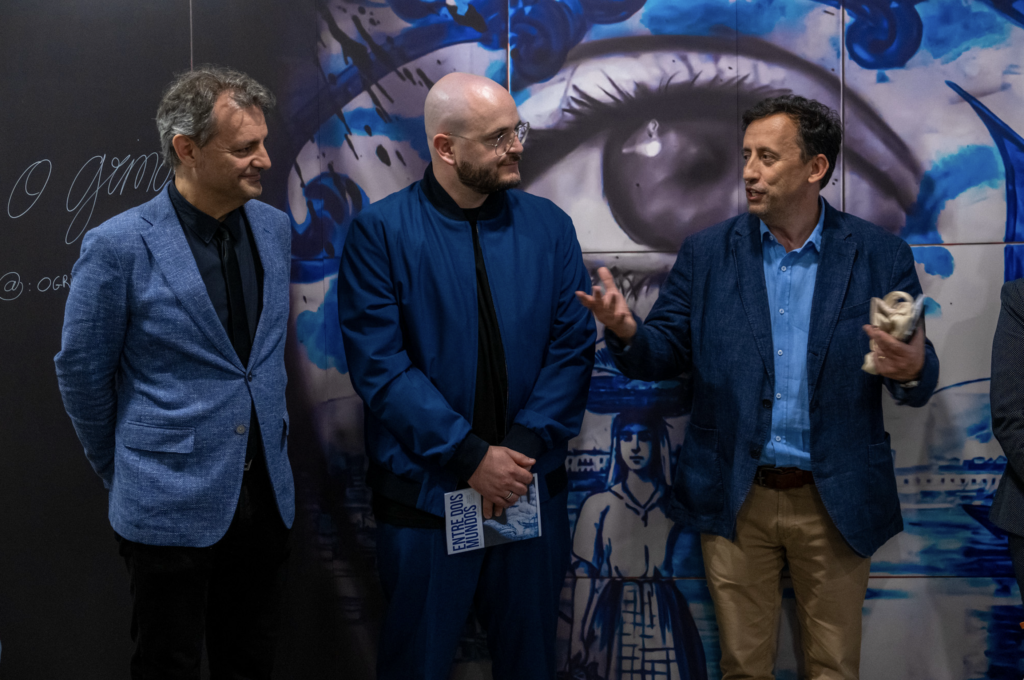
O Gringo in Ovar: Entre Dois Mundos at Aveiro 2024
O Gringo in Ovar: Entre Dois Mundos at Aveiro 2024
O Gringo in Ovar: Entre Dois Mundos at Aveiro 2024
O Gringo in Ovar: Entre Dois Mundos at Aveiro 2024
O Gringo in Ovar: Entre Dois Mundos at Aveiro 2024
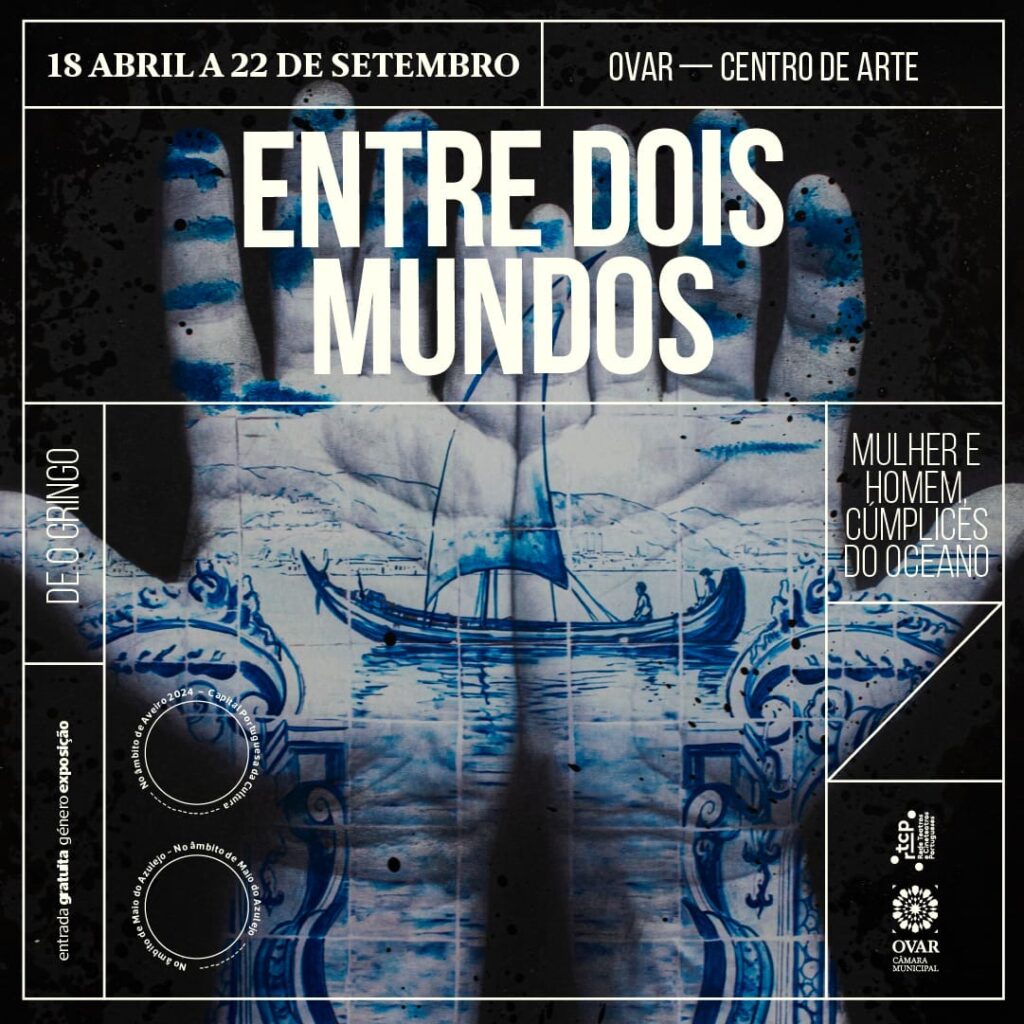
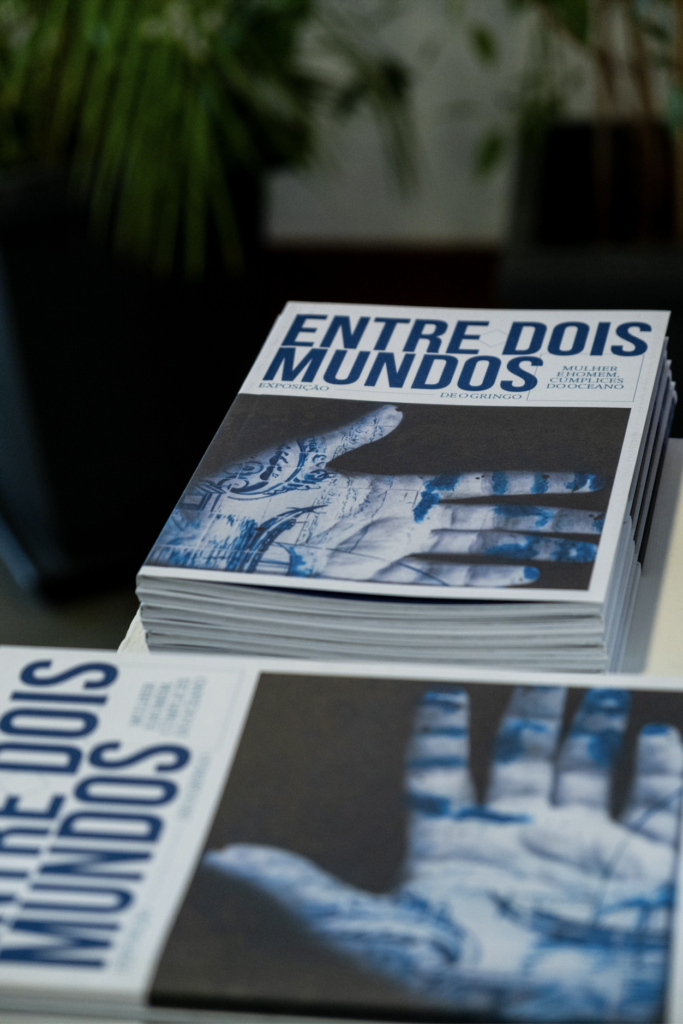
Exhibition Catalogue Cover and Promotional Materials
Photography, body and azulejo
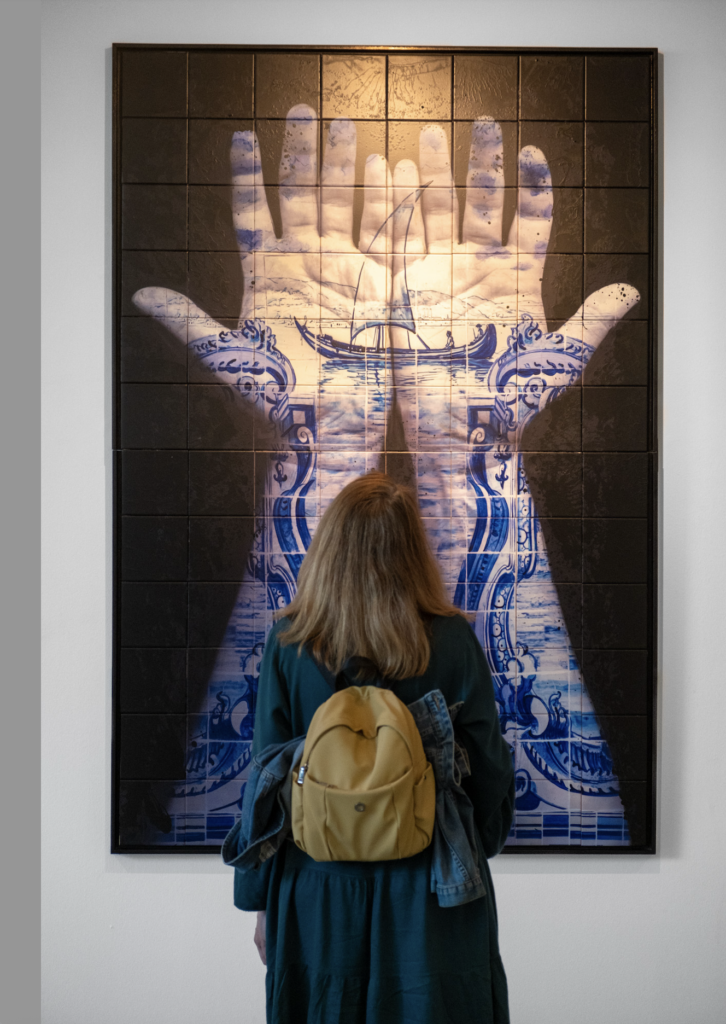
O Gringo’s practice combines photography, digital image-making and printing on glazed ceramic surfaces. The process brings contemporary techniques into dialogue with an art form developed over more than five centuries.
In architectural settings, azulejo often operates as a second skin covering a building. In O Gringo’s compositions, this relationship is inverted. Patterns and fragments of historical azulejo imagery appear on the skin of his models like tattoos. The human body becomes architecture, while the image becomes a surface carrying memory.
The works presented in Ovar were developed through several stages. Details from pieces in the Museu Nacional do Azulejo were selected and photographed before being integrated into studio portraits. The creative process also involved two fado singers, connecting the visual narrative to a musical language deeply associated with love, distance and longing
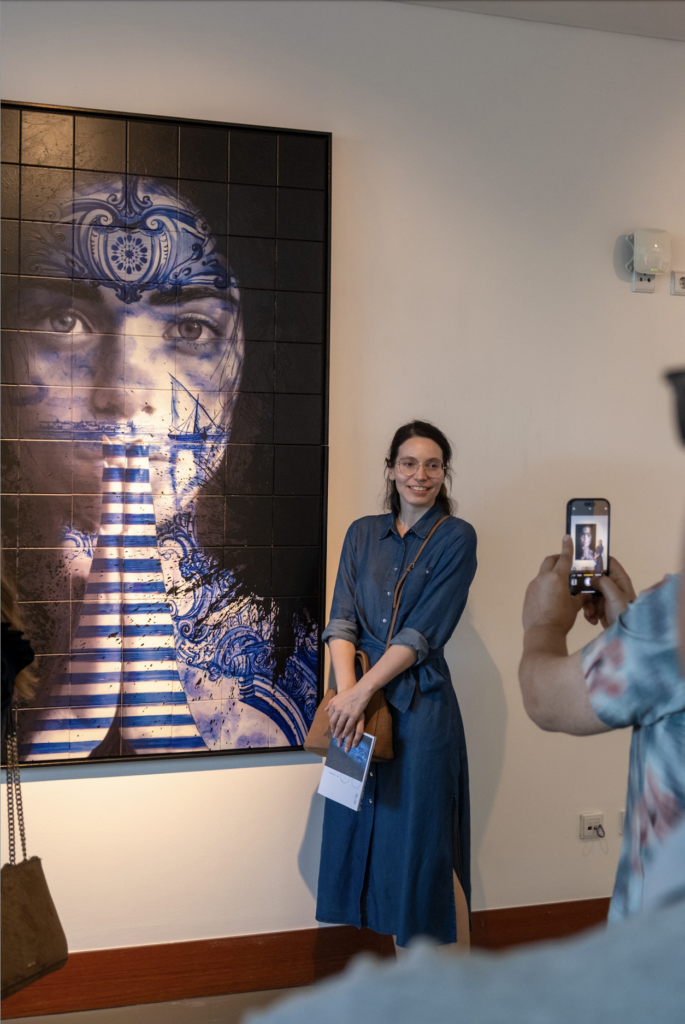
O Gringo in Ovar: Entre Dois Mundos at Aveiro 2024
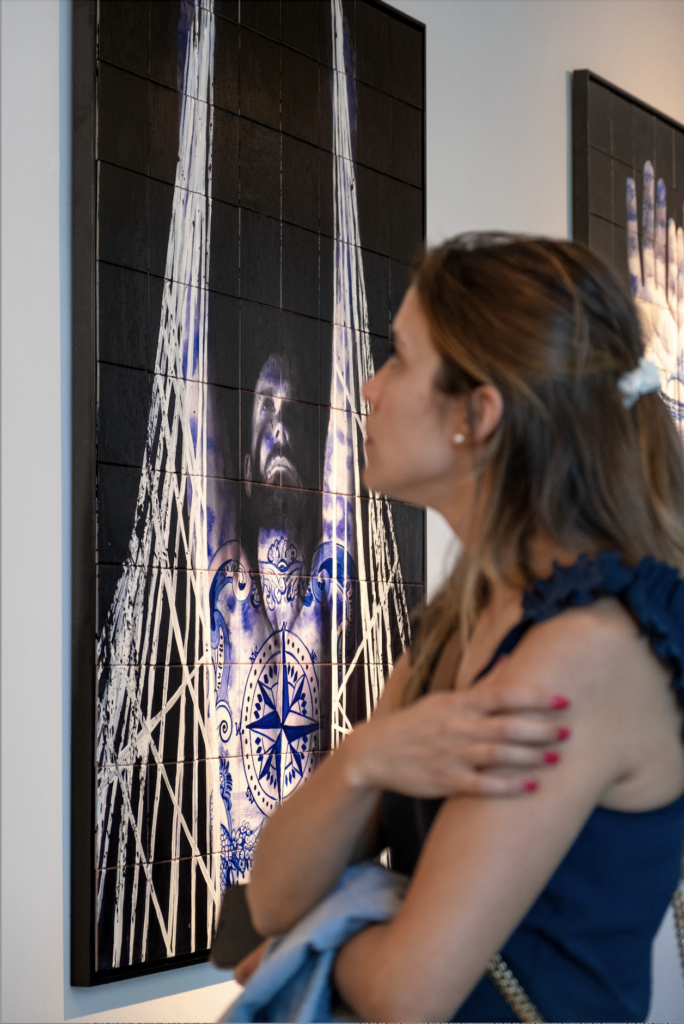
O Gringo in Ovar: Entre Dois Mundos at Aveiro 2024
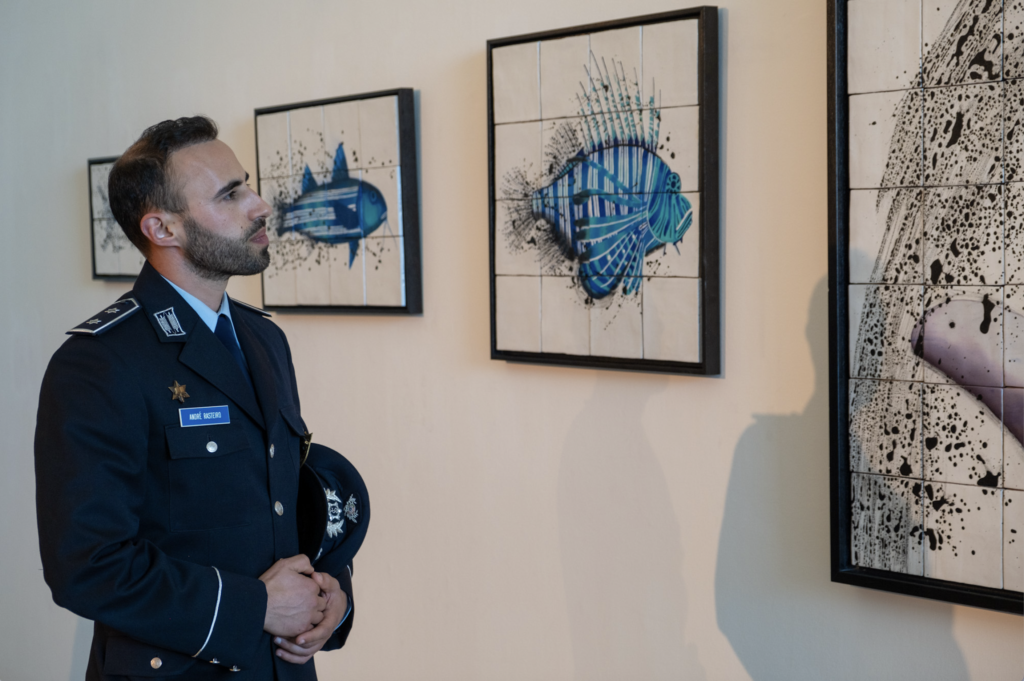
O Gringo in Ovar: Entre Dois Mundos at Aveiro 2024
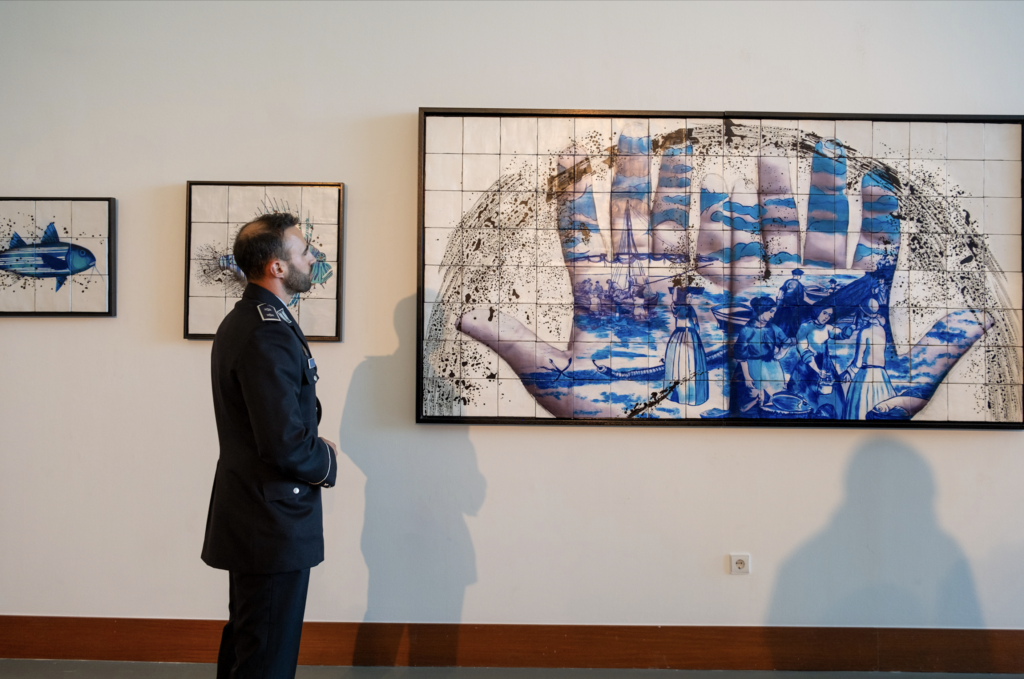
O Gringo in Ovar: Entre Dois Mundos at Aveiro 2024
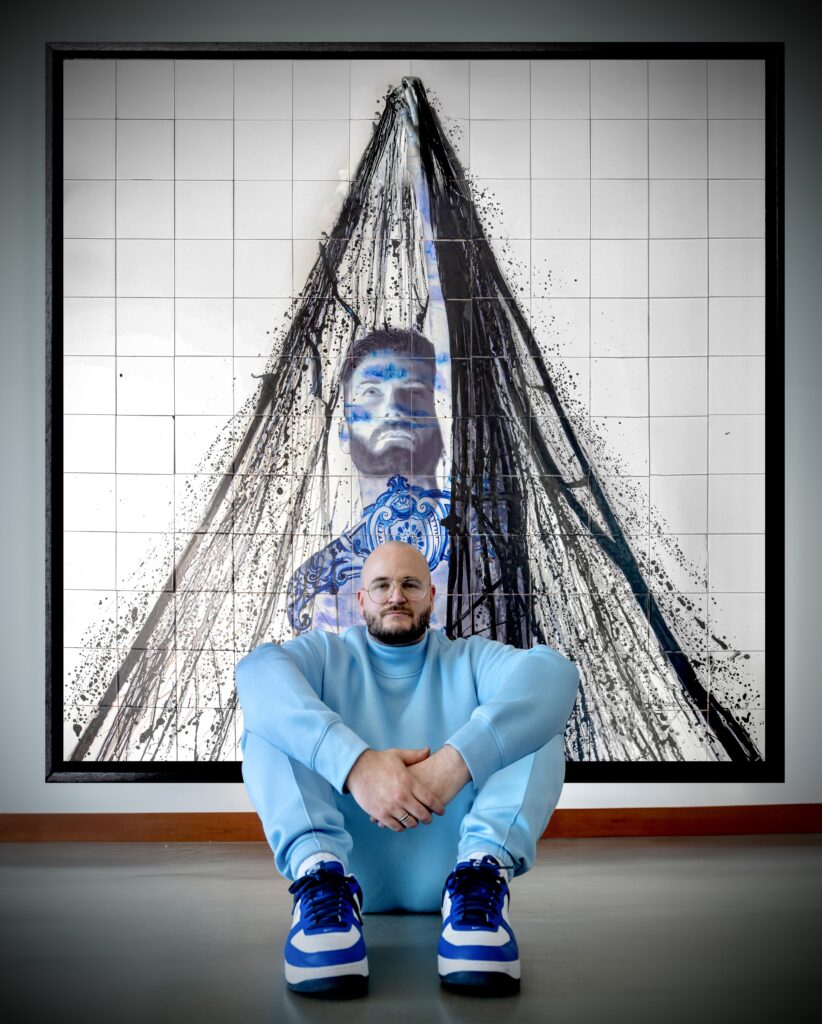
O Gringo Solo Exhibition, presented as part of the opening programme of Aveiro 2024 — Portuguese Capital of Culture, in Ovar.
From Baroque narrative to street art
The exhibition was accompanied by the critical essay Da estória para História — “From Story to History” — by Dr Alexandre Nobre Pais, then Director of the Museu Nacional do Azulejo and now Chairman of the Board of Directors of Museus e Monumentos de Portugal, E.P.E.In his essay, Alexandre Nobre Pais places O Gringo among the artists renewing the possibilities of azulejo today. He identifies a particular connection between O Gringo’s work and the narrative ambition of Baroque tile painting.
From the late seventeenth century onwards, sequences of tile panels created complex visual stories that required active participation from the observer. O Gringo reactivates this principle through contemporary images, constructing each composition as part of a wider story.“Among the new artists currently working with azulejo and proposing different paths, O Gringo is the one who comes closest to the Baroque conception of narrative.”
The figurative precision of the photographs is disrupted by splashes and gestural interventions. Alexandre Nobre Pais relates these movements to Jackson Pollock while identifying their deeper connection to O Gringo’s origins in street art.
Beneath the calm appearance of the faces, hands and bodies, these marks introduce movement, tension and emotional unrest. They make the artist’s gesture visible and invite the viewer to look beyond the immediate beauty of the image.
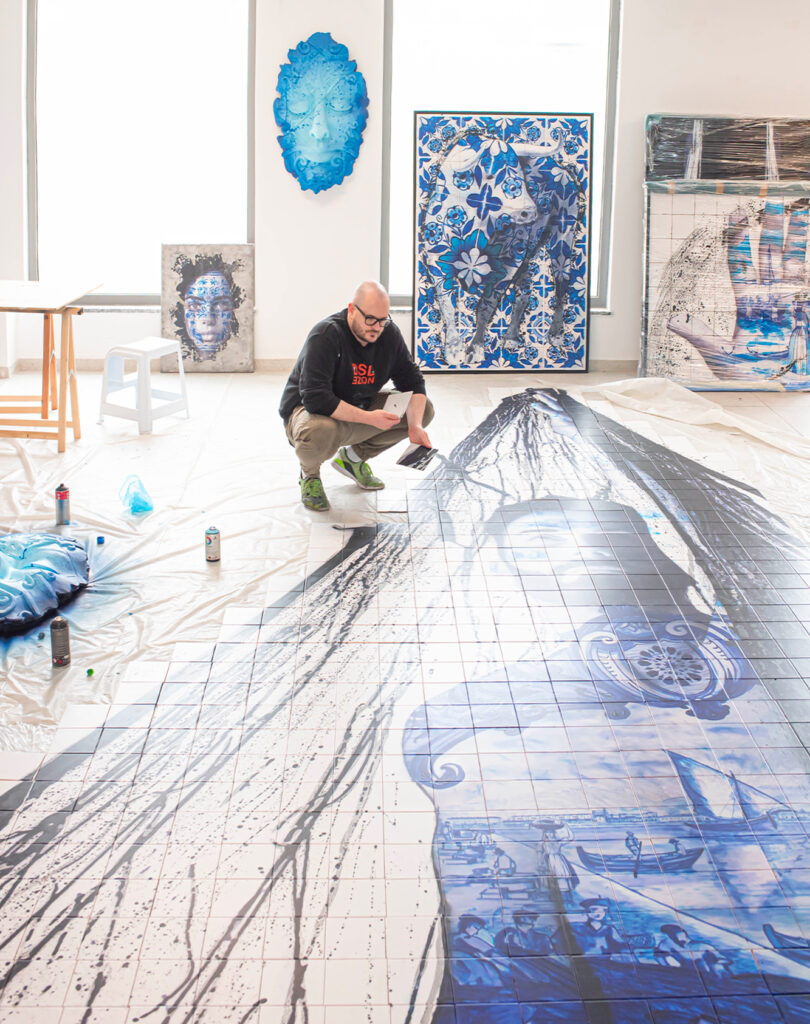
O Gringo’s Studio — Preparation of a 13-Metre Panel for the Opening of Aveiro 2024 — Portuguese Capital of Culture, in Ovar
Original text by Dr Alexandre Nobre Pais, then Director of the Museu Nacional do Azulejo and currently Chairman of the Board of Directors of Museus e Monumentos de Portugal, E.P.E.
Texto original do Dr. Alexandre Nobre Pais, à época diretor do Museu Nacional do Azulejo e atualmente presidente do Conselho de Administração da Museus e Monumentos de Portugal, E.P.E.
Da estória para História
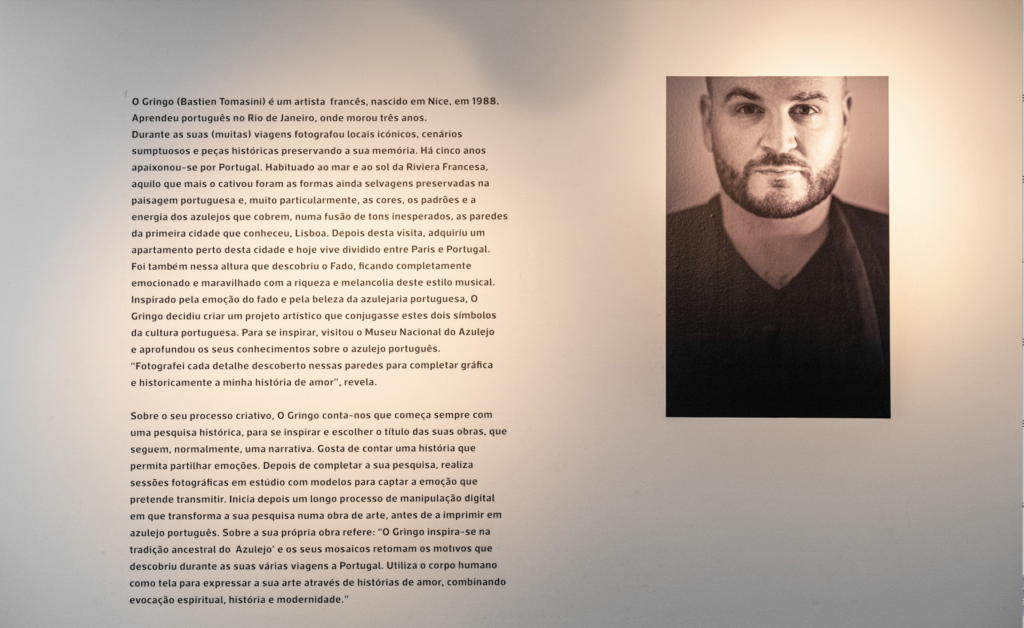
O mar e os que dele retiram o sustento é um dos aspetos centrais à região de Ovar e não surpreende que o tema tenha encontrado ressonâncias no trabalho que tem vindo a ser desenvolvido, em azulejaria, por Bastien Tomasini, a.k.a. O Gringo.
A proposta deste jovem artista, de empregar fotografia que imprime sobre azulejo, constitui uma abordagem diferente do que habitualmente conhecêramos, mas enquadra nesta arte, com mais de cinco séculos, alguns dos aspetos que caraterizam as linguagens contemporâneas. O uso da fotografia, o recurso a programas de imagem computarizada para criar as composições, a impressão, tudo são técnicas que vêm alterando o modo como víamos a Arte até às últimas décadas.
No caso dos seus trabalhos cria-se um paradoxo interessante. A aplicação do azulejo no espaço arquitetónico, que constitui, aliás, o seu desígnio primeiro, cria a ideia de que estes revestimentos constituem uma espécie de pele ou tatuagem, nos edifícios onde é colocado. Nos trabalhos desenvolvidos pelo Gringo, padrões de azulejos surgem na pele dos seus modelos, evocações de tatuagens que reverberam essa ideia, demonstrando que a beleza destes motivos pode também encontrar lugar nos corpos, também eles compondo uma narrativa.
Dos novos artistas que trabalham atualmente a azulejaria e que propõem diferentes caminhos, a partir de experiências já desenvolvidas, O Gringo será o que mais se aproxima da conceção narrativa do barroco. É no final do século XVII, mas com maior pujança na primeira metade de Setecentos, que assistimos à azu
lejaria a ganhar uma dimensão descritiva. Esta pode atingir graus de grande complexidade iconológica, mas, basicamente, consiste na sucessão de cenas que compõem uma parte de um relato que implica, da parte do observador, uma dimensão mais participativa, exigindo uma interatividade na compreensão e entendimento da mensagem pictórica representada. O Gringo emprega esse conceito, adaptando cada uma das suas composições a uma estória e associando a ela, por vezes, sonoridades musicais, cuja raiz é o Fado. São narrativas sobre o amor, que o mar une, mas que o mar separa e de gentes que dele dependem, dimensões que encontram em Ovar um local privilegiado para serem contadas e lembradas.
Nesta exposição, as peças d’O Gringo apresentam uma dimensão que transcende a figuração. Nelas, o artista projeta salpicos, referência a Jackson Pollock, mas que criam sobre a imaculada representação figurativa uma dimensão mais dinâmica e vital de street art, que é afinal a sua origem estética. Através deste movimento, sentimos que sob a superfície plácida de belos rostos, corpos e mãos, agitam-se sentimentos, tensões que pulsam e conduzem a ação dos que aí são retratados.
Esta interferência nas imagens torna o artista presente, sentimos a sua inquietação, o desassossego, um sobressalto que nos obriga a olhar mais atentamente a representação e ver para lá da inegável beleza das imagens. Como diz o provérbio: “águas paradas, são sempre profundas” e sobre a superfície dos corpos, onde se refletem imagens de azulejaria da região, retratando o quotidiano das gentes ligadas ao mar, há uma busca, a procura de um caminho, o encontrar de “um norte” que a rosa dos ventos pontua, um olho que procura o barco que permite partir ou até voltar…
E como sempre, nas narrativas que O Gringo constrói, é a Mulher que tem o papel principal, é ela a protagonista e a partir de quem a estória se desenrola. Nenhum painel exprime melhor o que aqui está em causa como aquele onde surge em sombra a ovarina, a mulher de Ovar cuja vida está ligada ao mar e que deu origem ao adjetivo “varina”. Aquela cuja vida se enreda na faina constante e no amor pelos seus pais, irmãos, filhos e amados que partem sempre e nem sempre regressam. Aquelas que consolidam a família nas ausências e a partilham nas presenças, sempre enredadas numa existência que as aprisiona, mas que o mar não verga, antes fortalece na rotina e na dor.
O que a visão d’O Gringo nos dá é a beleza arquetípica, a que existe para lá daquela que o mar, o sal, a areia, o vento e o sol desgastam e corroem. A formosura de carater daqueles que enfrentam os elementos, a adversidade e ficam velhos sendo jovens. As suas estórias ganham aqui, nestes painéis de azulejos, não a lógica de um documento, mas um sentido de gesta que lhes devolve a dimensão heroica, a grandeza daqueles que a História recorda e que sempre surgem, na nossa imaginação, jovens e belos, impávidos perante a adversidade e os contratempos, tal como O Gringo os retrata e imortaliza.
DR. Alexandre Nobre Pais
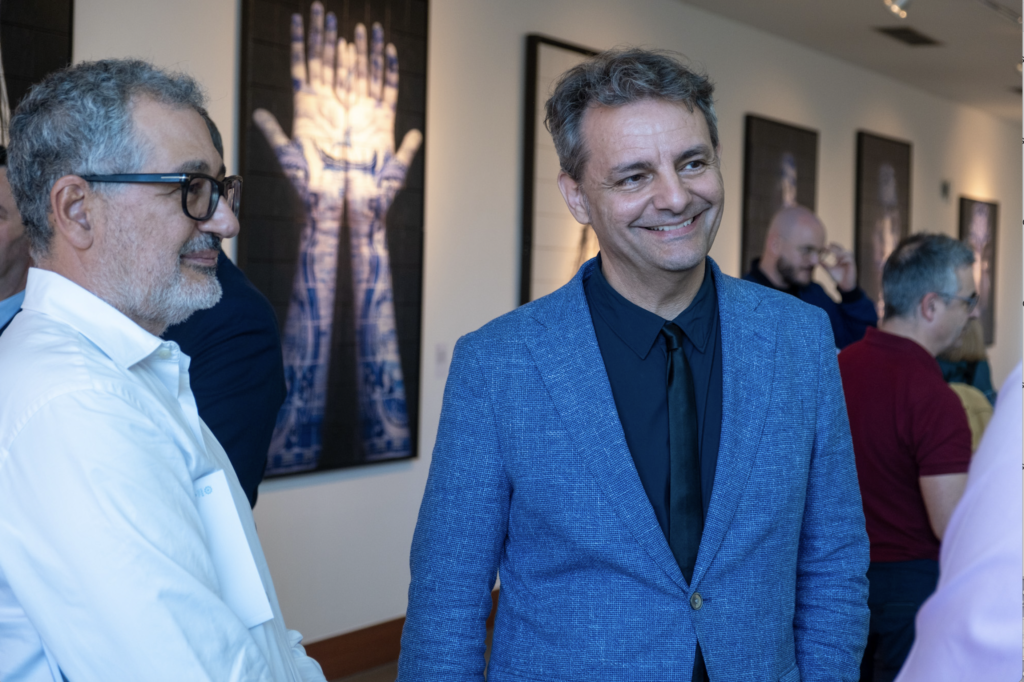
DR. Alexandre Nobre Pais – O Gringo in Ovar: Entre Dois Mundos at Aveiro 2024
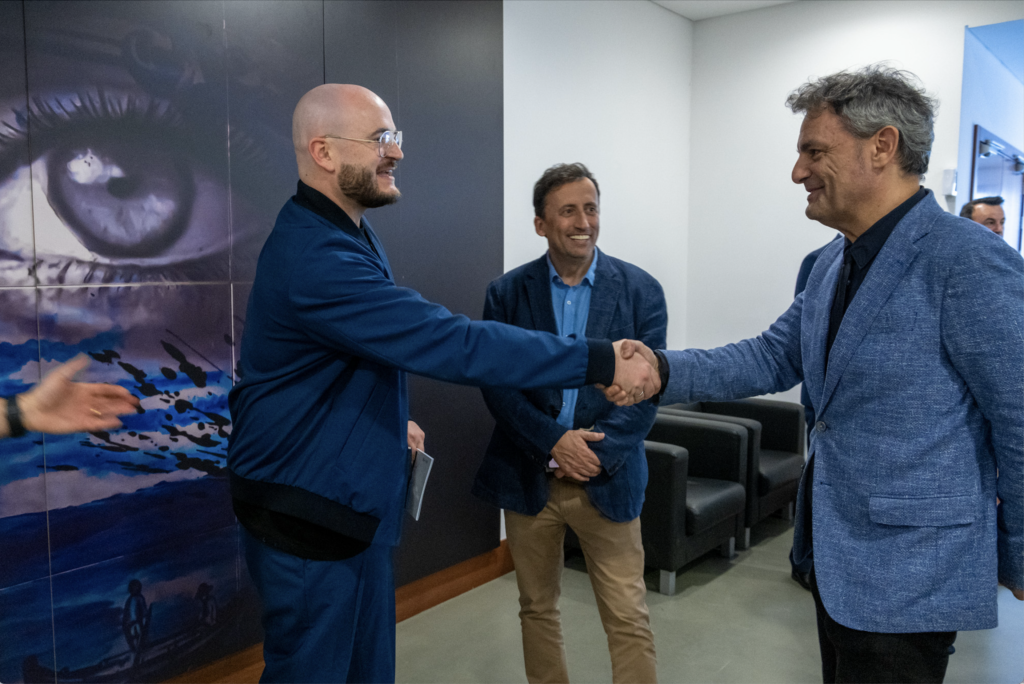
DR. Alexandre Nobre Pais – O Gringo in Ovar: Entre Dois Mundos at Aveiro 2024
From the gallery to the city: a 13-metre work
The Ovar project extended beyond the exhibition space.
A large-scale outdoor panel by O Gringo, measuring 13 metres in height, was designed and installed in Ovar. Documented through the artist’s technical project and audiovisual material, the work brought his imagery into direct dialogue with architecture and the public realm.
The transition from gallery work to architectural scale is particularly significant in Ovar. The city itself is read through ceramic surfaces, repeated patterns and decorated façades. By occupying an exterior structure, O Gringo’s work became part of that urban visual conversation.
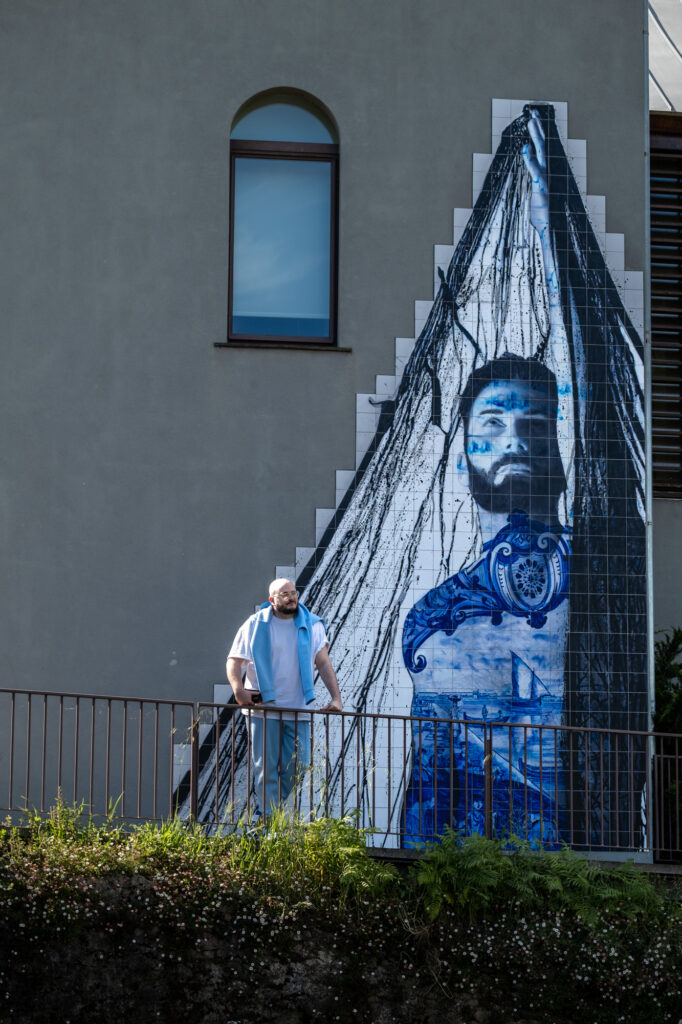
A 13-metre-high azulejo panel created by O Gringo as part of Aveiro 2024 — Portuguese Capital of Culture, in Ovar. Today, the monumental artwork has become one of the city’s cultural and tourist landmarks.
O Gringo – A new institutional chapter
Entre Dois Mundos continued a journey that received major institutional recognition in 2023 with Esperança Além do Horizonte, O Gringo’s solo exhibition at the Museu Nacional do Azulejo in Lisbon.
In Ovar, that research entered a new phase. The works moved from the museum to a city internationally connected to azulejo, entered a programme associated with Aveiro 2024 and expanded into the public space through a monumental outdoor installation.
The exhibition brought together contemporary art, institutional recognition, maritime memory, the narrative potential of azulejo and the visual energy of street art.
Ovar became an important chapter in O Gringo’s artistic trajectory: a place where stories passed into history and where the image moved from the body to the gallery, from the gallery to architecture, and from architecture into the city.
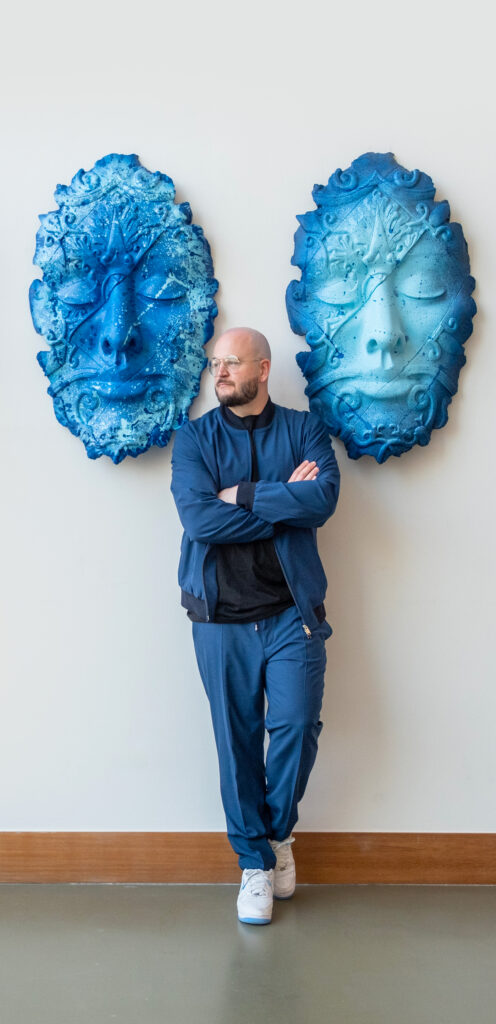
O Gringo in Ovar: Entre Dois Mundos at Aveiro 2024
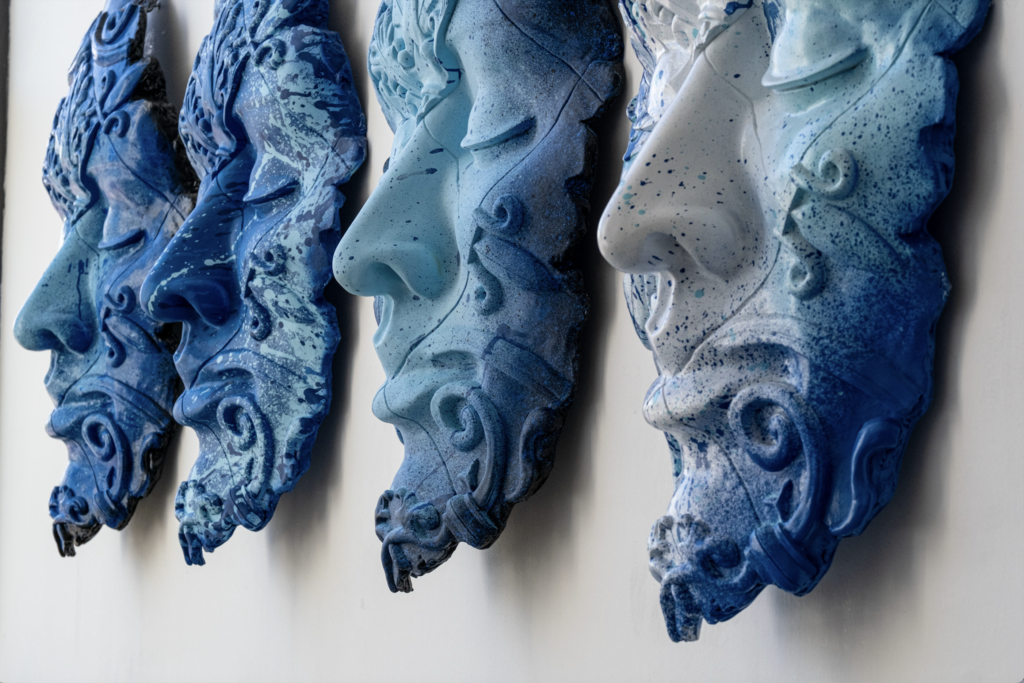
O Gringo in Ovar: Entre Dois Mundos at Aveiro 2024
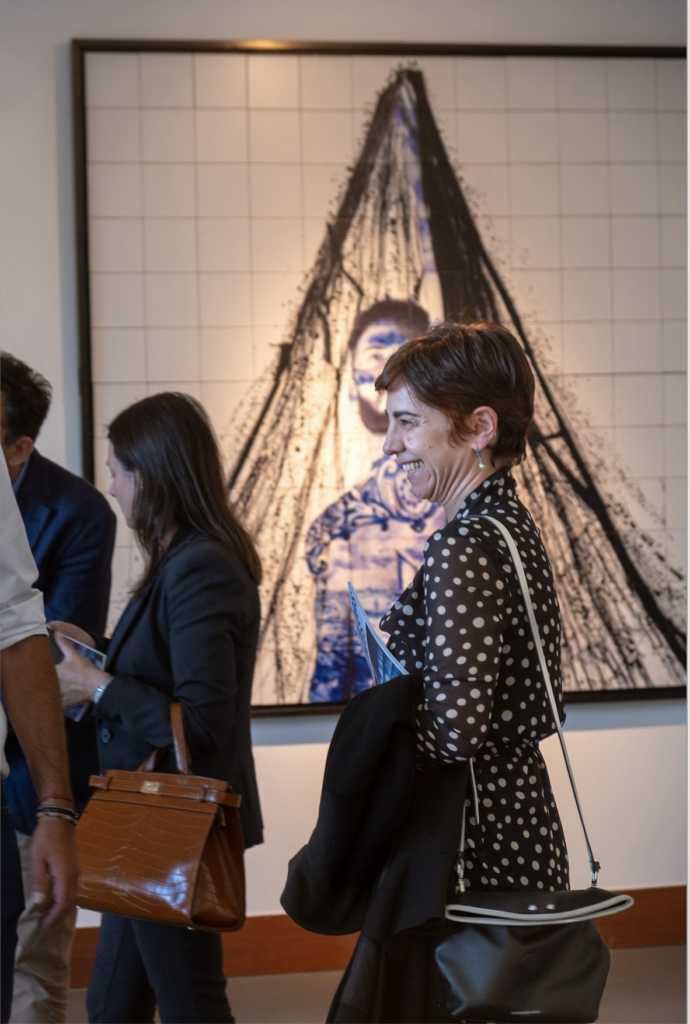
O Gringo in Ovar: Entre Dois Mundos at Aveiro 2024
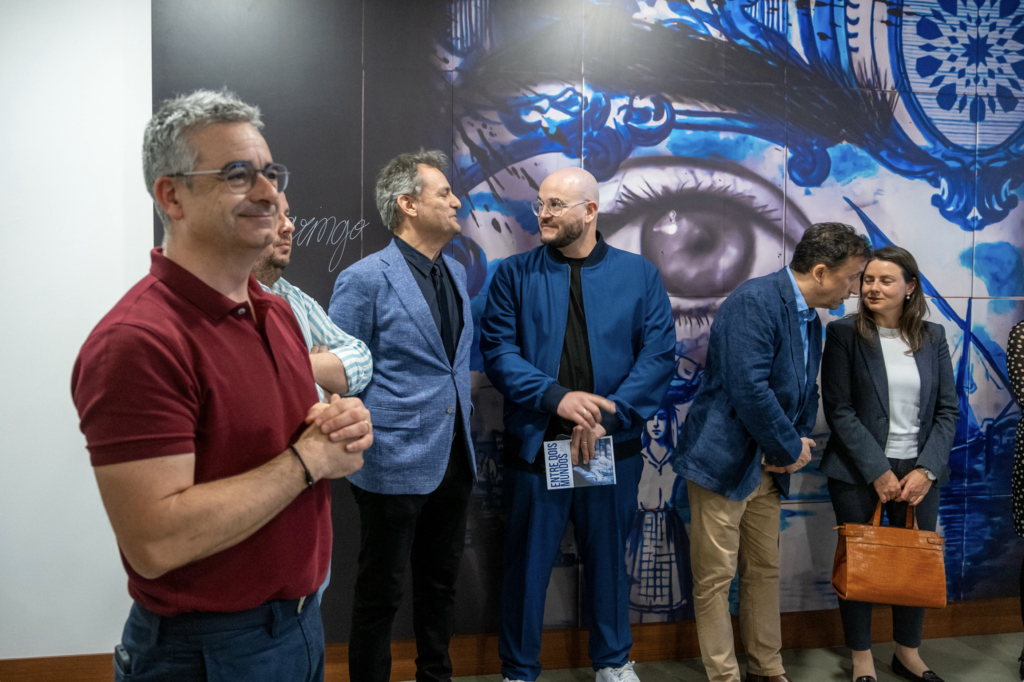
O Gringo in Ovar: Entre Dois Mundos at Aveiro 2024
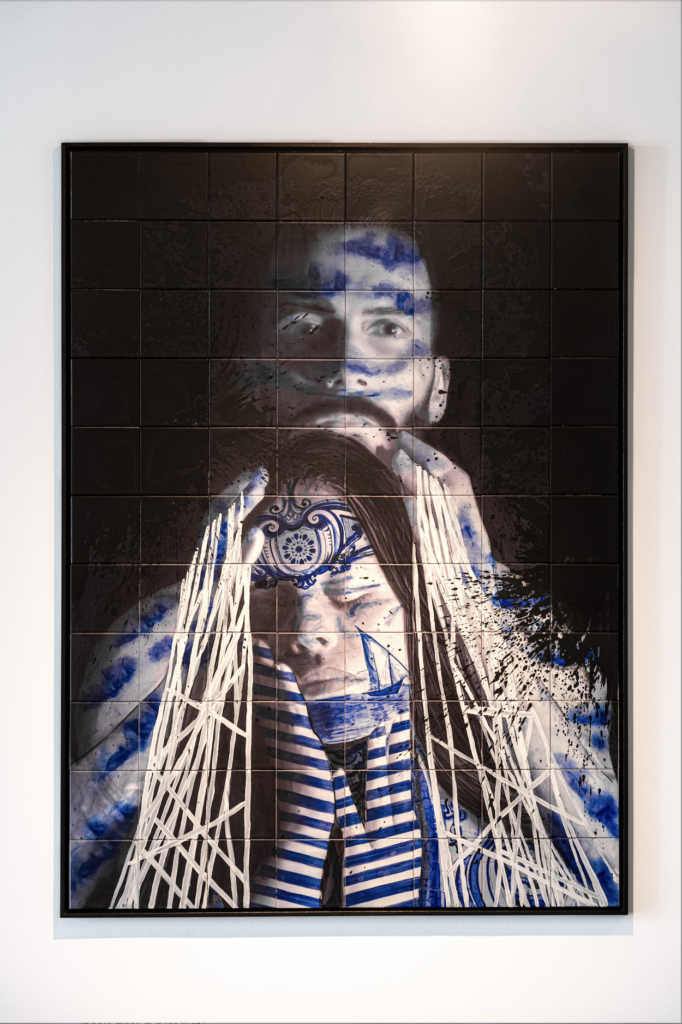
O Gringo in Ovar: Entre Dois Mundos at Aveiro 2024
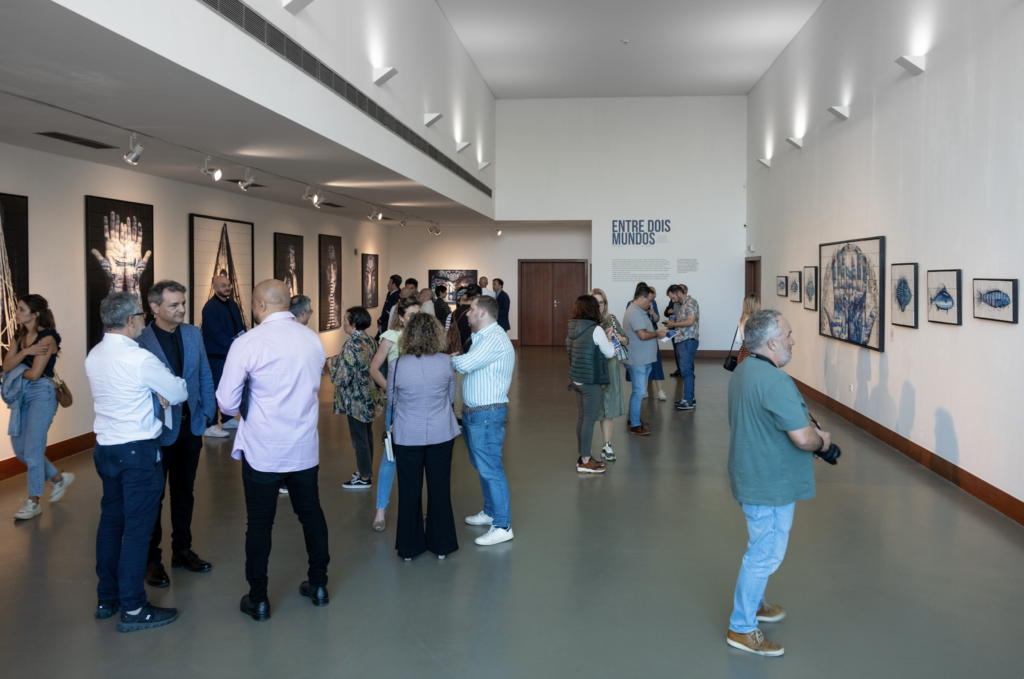
O Gringo in Ovar: Entre Dois Mundos at Aveiro 2024
PARIS 75 IMAGE – PRODUCTION
Paris 75 Image was honoured to enter into an agreement with the Municipality of Ovar for the creation and production of O Gringo’s exhibition project within the programme of Aveiro 2024 — Portuguese Capital of Culture. This important commission encompassed a solo exhibition at the Centro de Arte de Ovar, artistic interventions in the public realm and the creation of a monumental panel, bringing together contemporary art, azulejo and the emblematic figure of the varina.
Once again, our production company had the privilege of championing an artist and transforming a powerful cultural narrative into a contemporary artistic experience. This is the DNA of Paris 75 Image: connecting histories, institutions, communities and creative worlds that might not otherwise meet, and turning those encounters into meaningful and enduring projects.
I would once again like to express my sincere gratitude to the Museu Nacional do Azulejo in Lisbon, the municipalities of Ovar and Aveiro, and especially to O Gringo, whose tireless dedication, discipline and artistic vision made this project possible.
With my deepest respect,
GHBT
Sources and Further Reading
Municipality of Ovar — Maio do Azulejo and the visit to O Gringo’s Entre Dois Mundos
PÚBLICO — Ovar dedicates May to azulejo and invites visitors to discover the city
Aveiro Mag — Entre Dois Mundos at the Centro de Arte de Ovar until 22 September
OvarNews — O Gringo, Man and Woman, Companions of the Ocean
O Gringo — Entre Dois Mundos Collection
RELATED ARTICLES :
O Gringo National Tile Museum
O Gringo and CERCIMA: When Art Builds a Better Future
The Route of Blue — How German Cobalt and Chinese Porcelain Shaped European Azulejo
O Gringo Marianne at the French Embassy in Lisbon
O Gringo Exhibition – Galerie Ariel Jakob | Place des Vosges, Paris
O Gringo Estrela da Amadora: Sonhadores, o mural em azulejo pela inclusão
Written by
Gusttavo Henri Borges Tomasini

Founder & CEO – Paris 75 Image, Lda.
Founder – La Smart Galerie
International Cultural Producer • Art Director • International Art Consultant • Fine Art Photographer
Specialized in international cultural projects, museum exhibitions, institutional partnerships and the global promotion of contemporary art.
Lisbon • Paris